
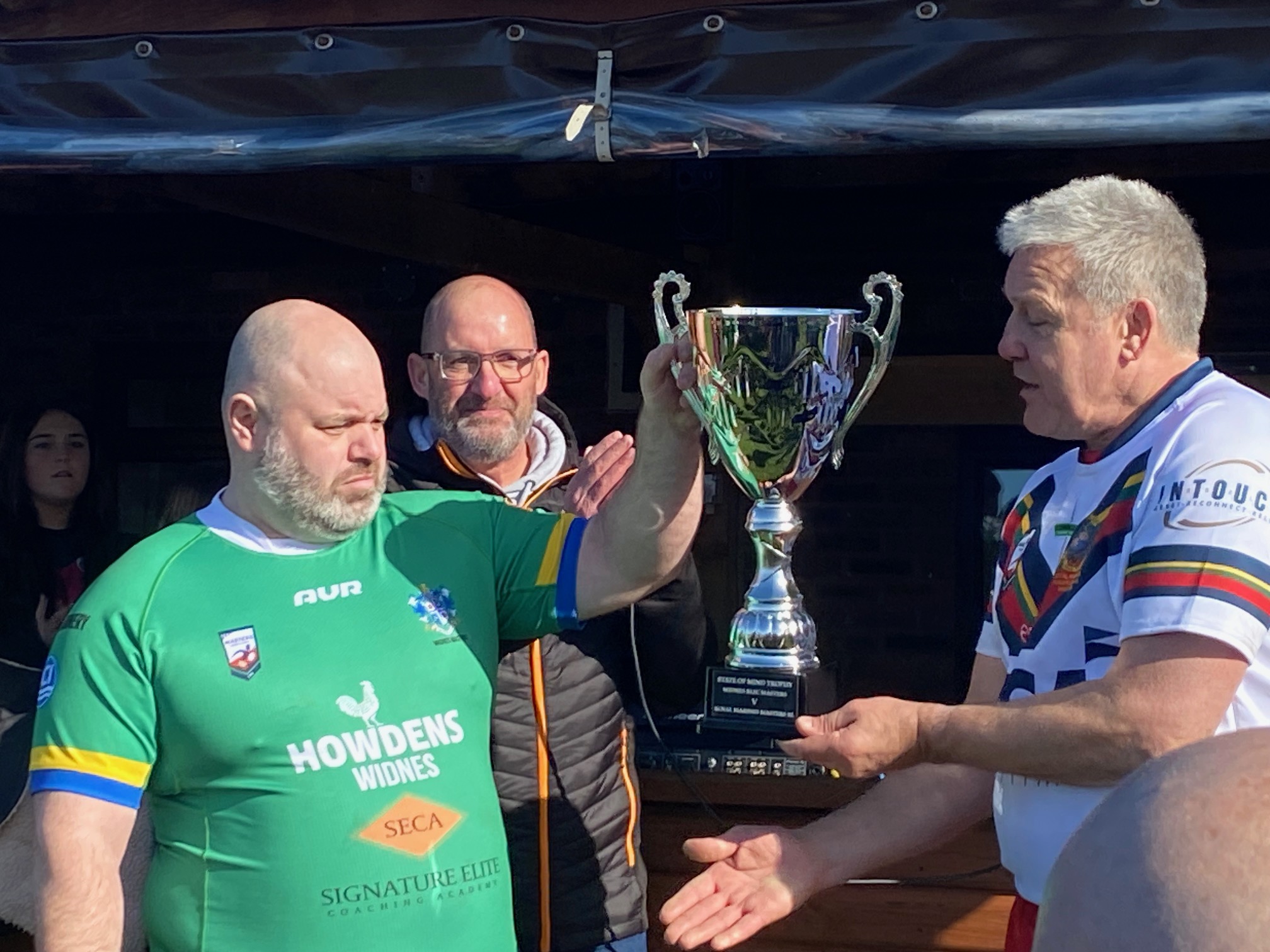
Widnes Masters Rugby League began at the start of 2026 with an idea formed by Gary Hughes, pictured above, who played for the shared State of Mind trophy against the Royal Marines Masters team.
STATE OF MIND SPORT charity, born out of rugby league, have been involved in some initial support for the team. There were 62 registered players and State of Mind Sport wanted to find out what being part of the Masters team has meant to those involved after 6 months.
Background – Masters rugby league is for men aged 35 or over and women aged 30 or over. Masters Rugby League is strictly a social version of the sport. The aim is for enjoyment, fitness benefits and social aspects whilst players engage in a version of Rugby League modified for ‘the older player.’ The most important rule is "everyone has to buy a drink for their opposite number!”

Survey Method – State of Mind Sport devised a short survey to try and find out what impact being part of the team had meant to the players. Of the 62 players 44 (71%) completed the survey that was sent out confidentially via WhatsApp.
Results – Have you enjoyed being back playing or training 100% said yes
What have you enjoyed about being involved in the Masters team? These were the responses
Former players often find themselves losing their identity after a career in sport and missing the high of playing sport. They express feelings of emptiness and confusion after leaving a familiar world and adjusting to a new reality. Many experience mental health challenges, such as anxiety, depression and post-traumatic stress disorder, after abruptly losing their community and purpose in sport. There may be physical health concerns from injuries, joint pain and chronic long-term conditions (Jack, 2025). Financial concerns can happen after losing a good source of income and having to find something else to pay the bills with a new job or career. All of these factors can negatively impact former players, so Masters Rugby League appears to be a great way to reverse or alleviate some of those negative aspects of stopping playing sport.
Is there anything else that being involved with the team has done for you?
“It saved my life”
“It’s helped me mentally”
“It's having a positive effect on my wellbeing”
“Saw old friends and made me happy”
“It's given me another set of friends”
“It's given me a new sense of belonging”
“Enjoying lacing the boots up and having some fun.”
“Has lifted my mood and given me a routine I enjoy, and can share with a great group of blokes.”
“It’s a brotherhood”
“It’s not even the games. It’s the craic. Lads are class, environment has brought me back from the brink. This is my mental health happy place.”
Masters Rugby League could help to address priorities in the UK Men’s Health Strategy (DOHSC,2025) that include fostering strong social, community and family networks, potentially to also tackle health challenges and conditions. It appears clear that this small sample of a new team being set up has addressed several issues in the first six months. I am sure there will be similar findings in other Masters Rugby League teams, and from a charity perspective it provides a great opportunity to target some of the main issues that impact on men in an environment that would be safe and supportive to provide brief health interventions that could improve and save lives.
Jack, E.G. (2025) Life After the Finish Line: What Happens to Athletes After Their Careers End https://www.athletesgonegood.com/life-after-the-finish-line-what-happens-to-athletes-after-their-careers-end/ Accessed 08/06/26
Department of Health and Social Care (2025) Men’s Health: a strategic vision for England. https://assets.publishing.service.gov.uk/media/69400f3b5cc812f50aa421df/mens-health-a-strategic-vision-for-england.pdf Accessed 08/06/26
If you want to find out more about Masters Rugby League check the home of rugby league here https://www.rugby-league.com/get-involved/play/masters
Written by Dr Phil Cooper MBE and Gary Hughes